
Table of Contents
- Frequently Asked Questions About the Northern Cardinal
- TL;DR
- Where will I most likely find Northern Cardinals?
- What’s on the menu, and how does it find food?
- What should I look for when trying to find Northern Cardinals?
- What interesting behaviors might I observe?
- What personality traits define this species?
- What are some tips when photographing this bird?
- Photography tips for Rockefeller State Park Preserve:
- What does this bird sound like?
- When does this bird nest, and what should I know about its breeding behavior?
- What challenges do Northern Cardinals face in their habitat?
- How close can I get without disturbing it?
- What’s a common myth or misconception about this species?
- Fun fact:
Frequently Asked Questions About the Northern Cardinal
TL;DR
- Northern Cardinals are found year-round at Rockefeller State Park Preserve
- My favorite birds to photograph because of their bright colors and personalities
- Crest position changes depending on what they’re doing—watch for this behavioral cue
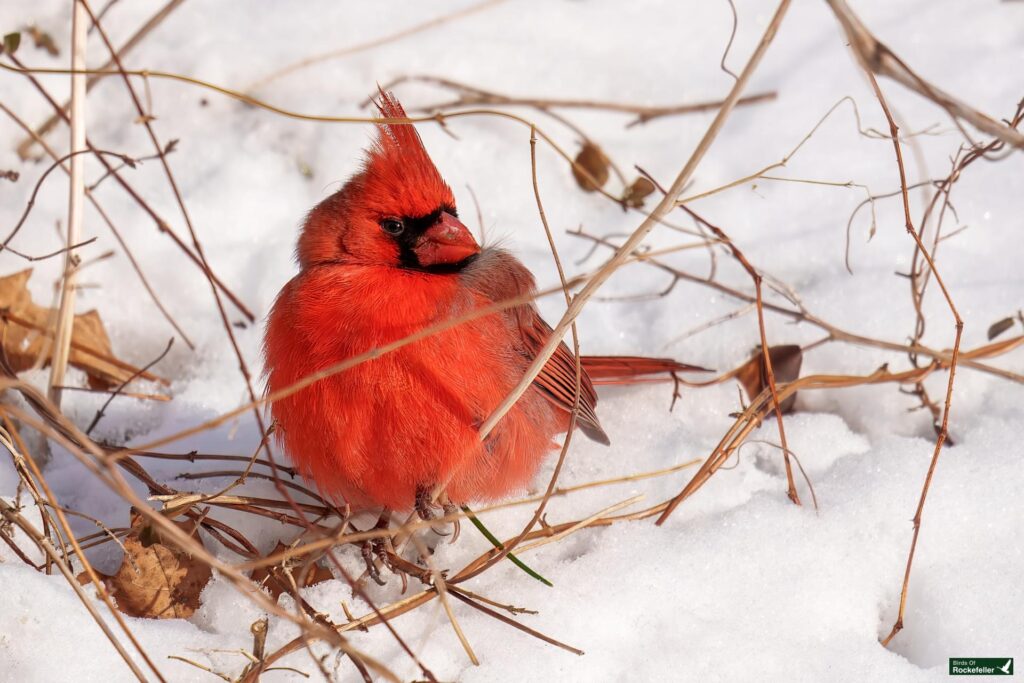
- Very visible from late fall to early spring; bright red against fresh snowfall creates stunning photographs
- Found all over the park, mostly on Farm Meadow Trail, Ash Tree Loop, Pocantico River Trail, and Brother’s Path
- Late fall offers berry-feeding opportunities on Farm Meadow Trail
- Often forage on the ground around bushes or trees
- Travel together—see the bright-red male first, followed by reddish-tan female, so spotting one means another is nearby
- Listen for fast-paced “chirps” around areas with bushes close to trails (Farm Meadow, Ash Tree, Overlook)
- Late fall to early spring: visit the bird feeder by the Park Office and watch the surrounding trees for photography opportunities
Where will I most likely find Northern Cardinals?
Northern Cardinals are non-migratory residents found year-round across the eastern United States, the Midwest, and the Southwest. They favor woodland edges, thickets, suburban gardens, and areas with dense shrubs. Unlike many colorful songbirds that prefer forest canopies, cardinals thrive in edge habitats where woods meet open areas. They’re equally at home in wild settings and well-landscaped suburban yards with feeders and native plantings.
At Rockefeller State Park Preserve in Pleasantville, NY, Northern Cardinals are found all year at the park. They are my favorite birds to photograph at the park because of their bright colors and personalities. I’ve found them all over the park, but mostly on the Farm Meadow Trail, Ash Tree Loop, Pocantico River Trail, and Brother’s Path. I often find Northern Cardinals by listening carefully for fast-paced “chirps” around areas with bushes close to the trails at Rockefeller State Park Preserve, like the Farm Meadow Trail, Ash Tree Trail, and the Overlook Trail. During late fall to early spring, you can find Northern Cardinals at the bird feeder by the Park Office. Watch the trees around the bird feeder and wait for birds to land, and you can get some great pictures.
What’s on the menu, and how does it find food?
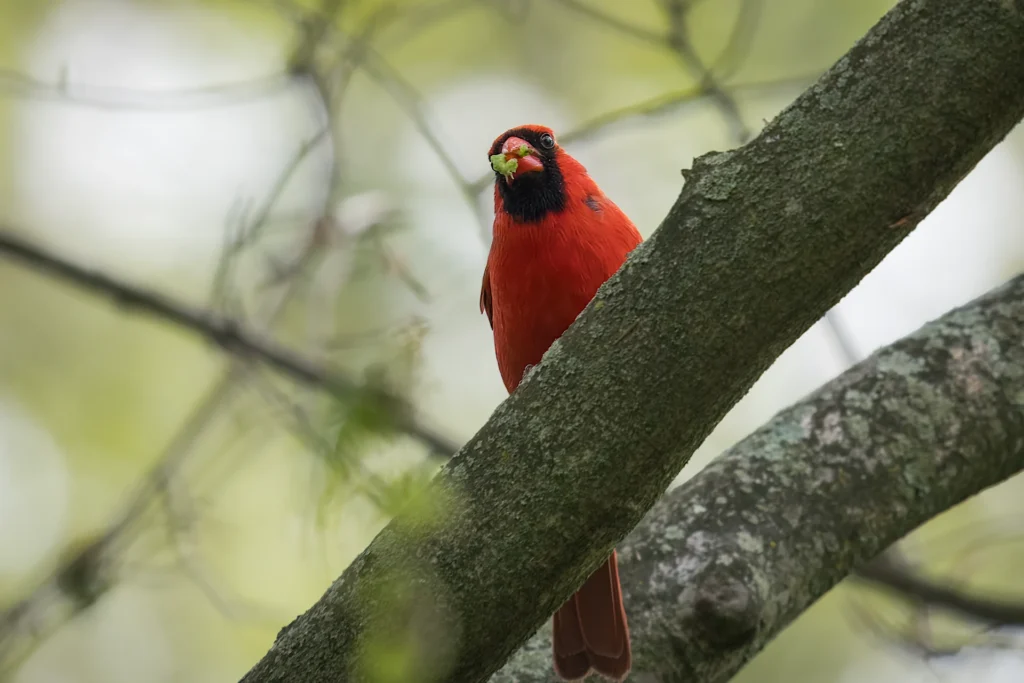
Northern Cardinals are primarily seed-eaters, with strong, conical bills perfectly designed for cracking open seeds. They love sunflower seeds, safflower, and various native plant seeds. In spring and summer, they supplement their diet with insects—beetles, caterpillars, grasshoppers, and cicadas—which provide essential protein for growing nestlings. In fall and winter, they switch heavily to berries and fruits from dogwood, sumac, wild grape, and holly. Northern Cardinals often forage on the ground for food around bushes or trees, hopping methodically and using their feet to scratch through leaf litter. You can see Northern Cardinals eating berries during the late fall on the Farm Meadow Trail. Watch them crack seeds with audible “clicks” or catch insects with quick, precise movements.
What should I look for when trying to find Northern Cardinals?
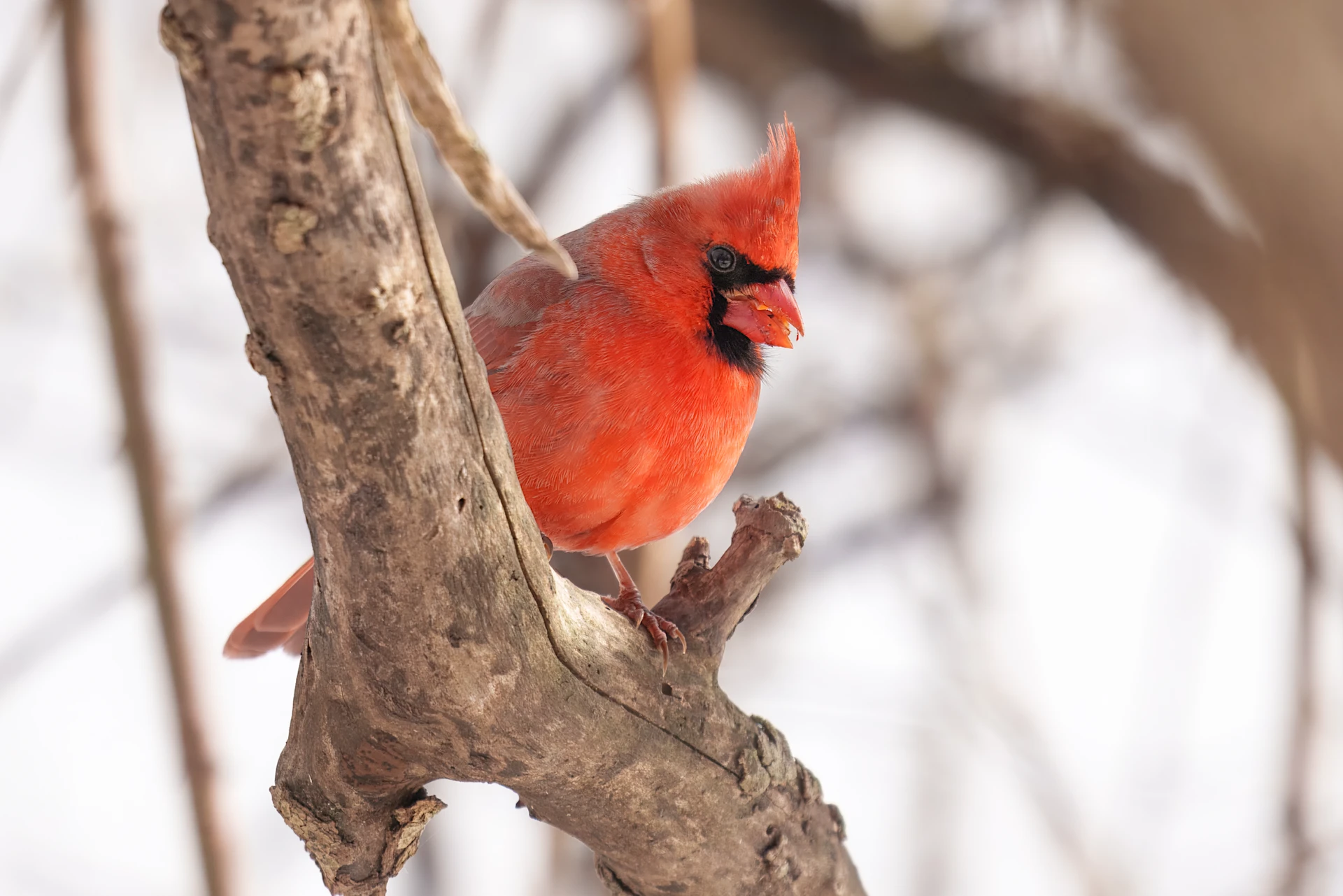
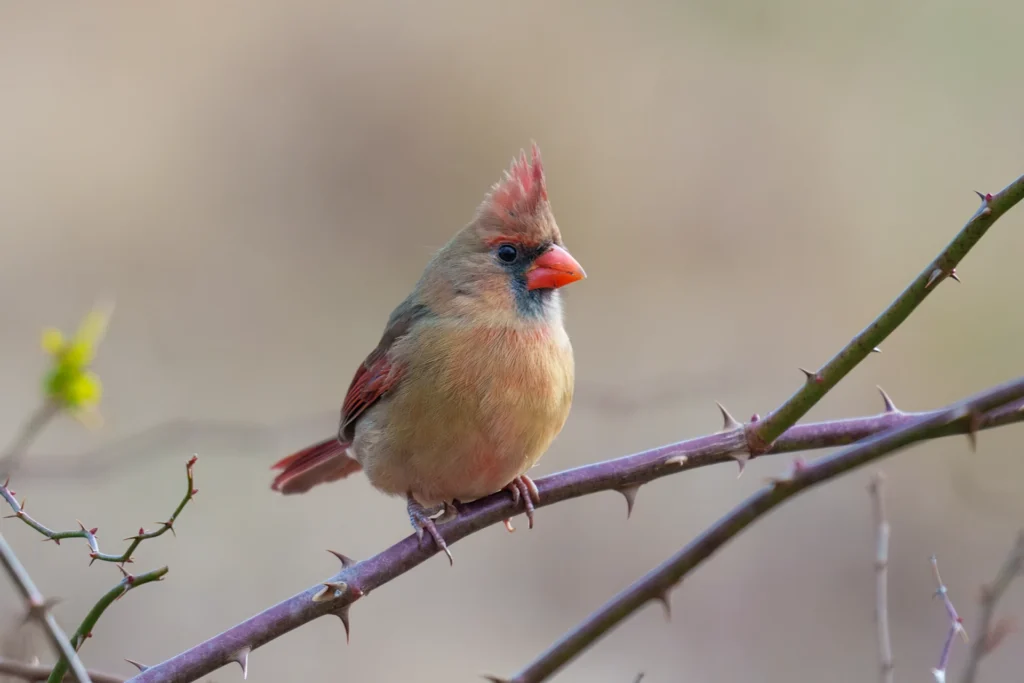
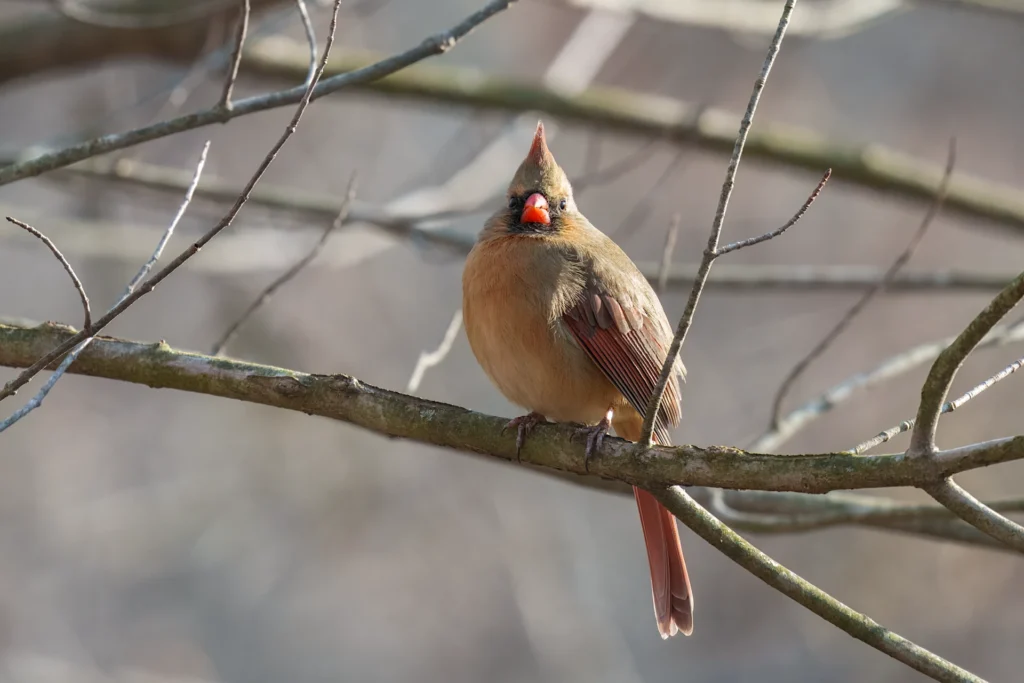
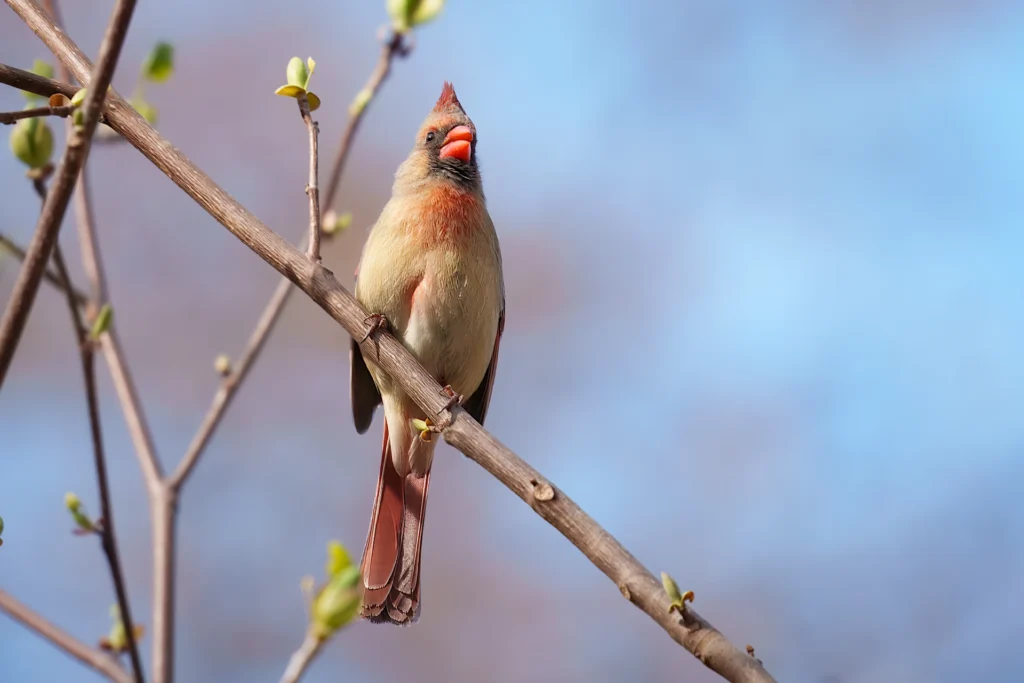
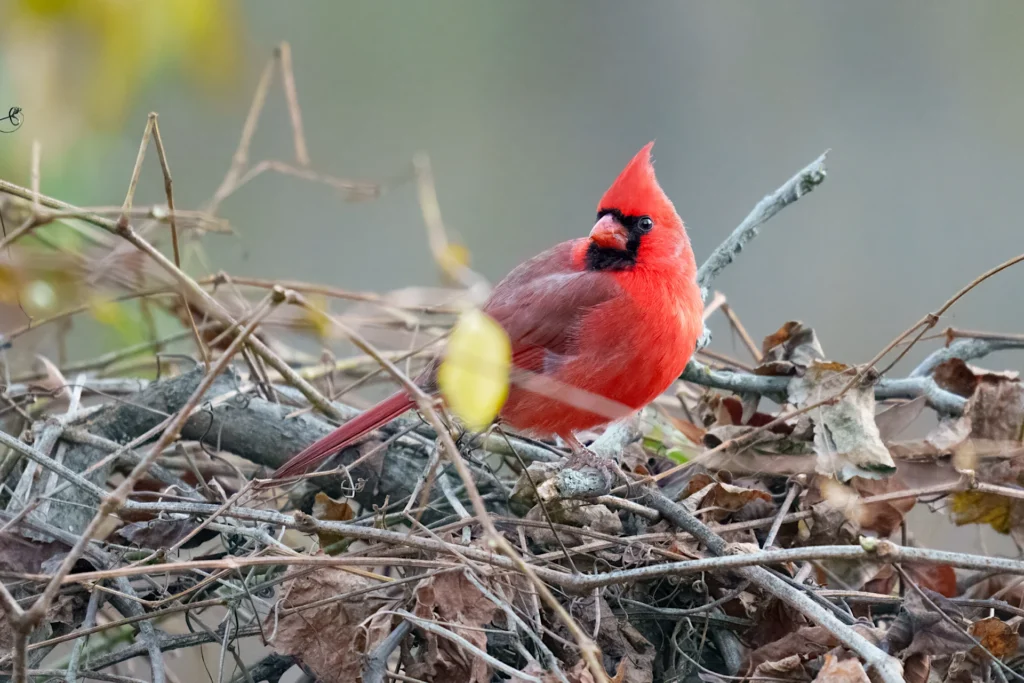
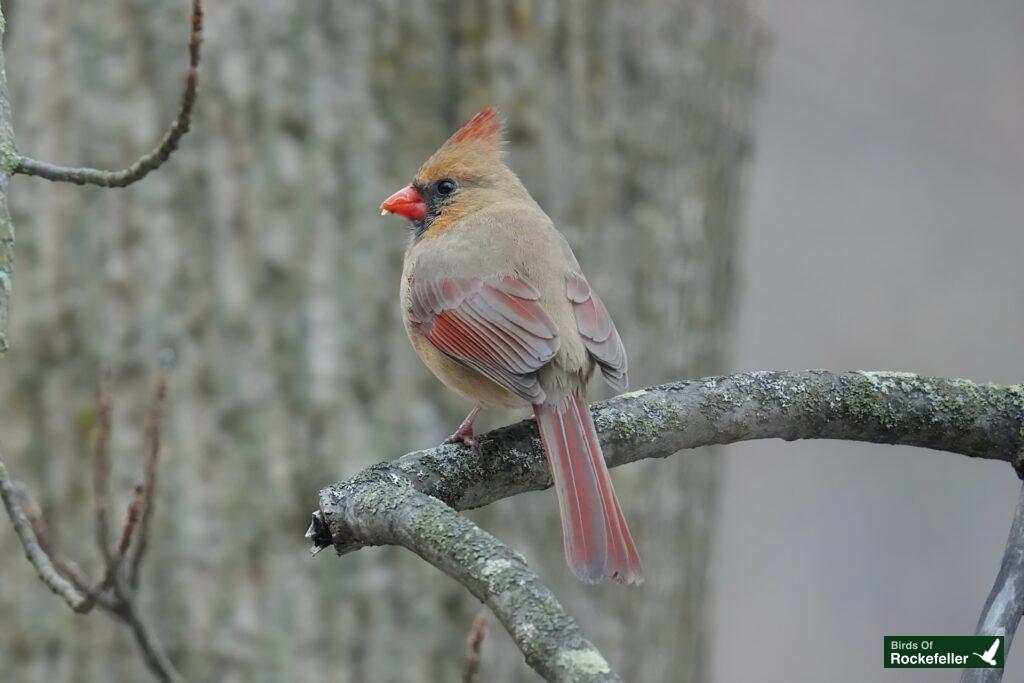
Male Northern Cardinals are unmistakable—brilliant red plumage, black face mask, and prominent pointed crest. Females are buffy tan with reddish tinges on wings, tail, and crest, plus the same black mask and orange-red bill. Both sexes have thick, conical orange or reddish bills. The position of their crests seems to change depending on what they are doing—raised when alert or excited, flattened when relaxed or feeding. Northern Cardinals often travel together; you may see the bright-red male first, followed by the reddish-tan female, so once you see one, look for another. Juveniles resemble females but have dark bills. They are very visible from late fall to early spring because of their bright colors, especially against snow or bare branches. Don’t confuse them with Summer Tanagers (no crest, different bill shape) or Pyrrhuloxias (gray with red accents, found in the Southwest).
What interesting behaviors might I observe?
Watch for males feeding females during courtship—this “courtship feeding” strengthens pair bonds and demonstrates the male’s ability to provide. Males are highly territorial during the breeding season, sometimes attacking their own reflection in windows or car mirrors, mistaking it for a rival. The position of their crests seems to change depending on what they are doing—watch for raised crests during territorial disputes, alarm situations, or courtship displays, and lowered crests when calmly feeding or resting. Cardinals are one of the few species where females sing—both sexes produce complex songs, and pairs often duet. In winter, cardinals become more social, sometimes gathering in small flocks at productive feeding sites. Watch them methodically work through undergrowth, hopping along branches, and making short flights between cover.
What personality traits define this species?
Confident, vocal, and adaptable. Northern Cardinals are bold birds that readily visit feeders even when humans are nearby. They’re persistent singers—males often sing from the same prominent perches day after day, establishing their territories through sound. They’re creatures of habit, returning to the same feeding and singing locations regularly. Despite their striking appearance, they’re relatively shy about nesting, choosing dense cover for nest sites. They’re also remarkably adaptable, thriving in human-altered landscapes while maintaining their natural behaviors. Their bright colors and personalities make them my favorite birds to photograph at the park.
What are some tips when photographing this bird?
Northern Cardinals are excellent photography subjects year-round, but they are very visible from late fall to early spring because of their bright colors. Bright red Northern Cardinals against fresh white snowfall give you an opportunity to create some great photographs—the color contrast is absolutely stunning. Early-morning or late-evening light makes males appear to glow. Photograph them at feeders, but also look for more natural settings—perched on snow-covered branches, feeding on berries, or singing from exposed perches. The position of their crests seems to change depending on what they are doing, so watch for raised crests during singing or alarm calls for more dynamic images.
Northern Cardinals often travel together; you may see the bright-red male first, followed by the reddish-tan female. Once you see one, look for another and be patient for pair shots. Northern Cardinals often forage on the ground for food around bushes or trees—get low for eye-level shots of ground-feeding birds. Backlit males can appear almost luminous, with light filtering through red feathers. Don’t overlook females—their subtle beauty and warm tones photograph beautifully, especially against colorful backgrounds.
Photography tips for Rockefeller State Park Preserve:
Year-round locations: Focus on Farm Meadow Trail, Ash Tree Loop, Pocantico River Trail, and Brother’s Path where cardinals are most frequently found.
Listen first: Find Northern Cardinals by listening carefully for fast-paced “chirps” around areas with bushes close to trails, particularly Farm Meadow Trail, Ash Tree Trail, and Overlook Trail.
Late fall berry feeding: You can see Northern Cardinals eating berries during late fall on the Farm Meadow Trail—photograph them feeding for natural behavior shots.
Winter feeder opportunities: Visit the bird feeder by the Park Office from late fall through early spring. Watch the trees around the bird feeder and wait for birds to land—you can get some great pictures.
Snow photography: Bright red Northern Cardinals against fresh white snowfall create spectacular images—plan visits after snowfall for maximum color contrast.
Ground foraging: Cardinals often forage on the ground around bushes or trees—position yourself low for eye-level shots.
Pair photography: Cardinals travel together—spot the bright-red male first, then wait for the reddish-tan female to appear nearby.
Crest observation: The position of their crests changes depending on what they’re doing—capture raised crests during singing, territorial displays, or alarm calls.
Year-round accessibility: As year-round residents, they offer consistent photography opportunities year-round.
What does this bird sound like?
Male Cardinals are prolific singers with loud, clear, whistled songs—often described as “cheer-cheer-cheer,” “birdy-birdy-birdy,” or “what-cheer, what-cheer.” Each male has a repertoire of different song variations. Remarkably, females also sing, often from the nest, possibly communicating with mates. Their common call is a sharp, metallic “chip” or series of fast-paced “chirps”—I often find Northern Cardinals by listening carefully for these fast-paced “chirps” around areas with bushes close to the trails. The call note is distinctive once you learn it, often alerting you to a cardinal’s presence before you see it. Both sexes sing year-round, though most persistently during breeding season.
When does this bird nest, and what should I know about its breeding behavior?
Northern Cardinals begin nesting remarkably early—sometimes as early as March—and often raise 2-4 broods per season, continuing into August. Females build well-concealed cup nests in dense shrubs, vines, or small trees, typically 3-10 feet high. She uses twigs, bark strips, grasses, and rootlets, lining the nest with fine grasses and hair. Females lay 2-5 pale gray or greenish eggs with brown or gray speckles, incubating them for 11-13 days. Males don’t incubate but feed incubating females and defend territory vigorously. Both parents feed nestlings, which fledge at 9-11 days old. Males often take over feeding fledglings from early broods while females start building nests for subsequent broods. Cardinals are loyal to their territories, often nesting in the same area year after year.
What challenges do Northern Cardinals face in their habitat?
Window collisions kill many cardinals, especially territorial males attacking their reflections. Cat predation is a significant threat, particularly for ground-feeding birds and fledglings. Brown-headed Cowbirds parasitize some nests, though cardinals sometimes recognize and reject cowbird eggs. Severe winter weather can be challenging, especially ice storms that coat food sources. West Nile Virus has impacted some populations. Habitat loss through development reduces nesting sites, though cardinals adapt well to suburban areas. Despite these challenges, Northern Cardinals are thriving—their populations have actually expanded northward over the past century, likely due to bird feeding and climate change. They remain abundant across their range.
How close can I get without disturbing it?
Northern Cardinals are relatively tolerant, especially at feeders where they can be approached to within 10-20 feet. In natural settings, they’re more cautious, typically flushing at 30-50 feet. During nesting season, observe from a greater distance—at least 30-50 feet from nests—as repeated close approaches can cause nest abandonment. If a cardinal gives alarm calls (sharp “chip” notes) or raises its crest while looking at you, you’re causing stress; back away. A 300-400mm lens provides frame-filling shots from comfortable distances. Cardinals are creatures of habit—if you find a favorite perch or feeding spot, you can set up at a respectful distance and wait for them to return.
What’s a common myth or misconception about this species?
Many people think only males are cardinals, not realizing the tan birds with red accents are females of the same species. Another misconception is that cardinals migrate south for winter—they’re non-migratory, staying in their territories year-round, which is why they’re so visible from late fall to early spring. Some believe cardinals mate for life; while they often stay paired across seasons if both survive, they’ll find new mates if partners die. There’s a myth that seeing a cardinal means a deceased loved one is visiting—this is a spiritual belief, not a biological one, but it speaks to how beloved these birds are. Finally, some think cardinals are declining, but they’re actually thriving and expanding their range northward.
Fun fact:
Northern Cardinals are one of the few bird species where females sing! In most songbirds, only males sing, but female cardinals have complex songs and often sing from the nest, possibly communicating with mates or defending territory. Males have been recorded with over 24 different song variations. The bright red color in males comes from carotenoid pigments obtained through diet—the redder the male, the better his diet and overall health, making brilliant males more attractive to females. Cardinals can live up to 15 years in the wild, though most survive 3-4 years. The position of their crests seems to change depending on what they are doing—it’s controlled by muscles and serves as a visual communication tool. They’re the state bird of seven states—more than any other species! The scientific name Cardinalis cardinalis refers to the red robes worn by Catholic cardinals.