
Table of Contents
- Frequently Asked Questions About the Red-Tailed Hawk
- TL;DR
- Where will I most likely find Red-Tailed Hawks?
- What’s on the menu, and how does it find food?
- What should I look for when trying to find Red-Tailed Hawks?
- What interesting behaviors might I observe?
- What personality traits define this species?
- What are some tips when photographing this bird?
- Photography tips for Rockefeller State Park Preserve:
- What does this bird sound like?
- When does this bird nest, and what should I know about its breeding behavior?
- What are the challenges Red-Tailed Hawks face in the habitat?
- How close can I get without disturbing it?
- What’s a common myth or misconception about this species?
- Fun fact:
Frequently Asked Questions About the Red-Tailed Hawk
TL;DR
Red-Tailed Hawks (buteo jamaicensis) are North America’s most common hawk and my most-photographed at Rockefeller State Park Preserve, where the preserve is home to many species, including Bald Eagles, Ospreys, Peregrine Falcons, Merlins, and Cooper’s Hawks. Look for these year-round residents (most active in spring and fall) perched in tall trees overlooking open fields along the Ash Tree Loop, Farm Meadow Trail, Barnyard Hill Trail, Canter’s Alley, and Pocantico River Trail. Watch for their distinctive rusty-red tail, broad wings, and patient hunting behavior—they can sit motionless on a branch for a long time. When a perched hawk stands up and leans forward, it’s about to take off—be ready for flight shots. Don’t be surprised to see them chased by smaller birds like red-winged blackbirds and mockingbirds. The preserve is also home to “Lucy,” a rarely-seen leucistic Red-Tailed Hawk that’s mostly white with tan coloring—I’ve only spotted her once in hundreds of miles of hiking.
Where will I most likely find Red-Tailed Hawks?
Red-Tailed Hawks are North America’s most widespread hawk, found in virtually every habitat—from deserts and grasslands to forests, agricultural areas, and even urban parks. They prefer open country with scattered trees or woodland edges where they can hunt from brqnches overlooking fields. Look for them perched on telephone poles, fence posts, or tall trees along highways and open areas. You’ll see them soaring in wide circles, especially on warm days when thermals lift them effortlessly.
At Rockefeller State Park Preserve in Pleasantville, NY, red-tailed hawks are year-round residents, though they are most active in the spring and fall. Rockefeller State Park Preserve is home to many species—I have photographed Bald Eagles, Ospreys, Peregrine Falcons, Merlins, Cooper’s Hawks, and Red-Tailed Hawks. My most-photographed is the Red-Tailed Hawk. I’ve seen Red-Tailed Hawks gliding through the sky in many parts of the park. The trails I’ve found and photographed the most Red-Tailed Hawks are the Ash Tree Loop, Farm Meadow Trail, Barnyard Hill Trail, Canter’s Alley, and the Pocantico River Trail. As you walk through the park, take a look at taller trees overlooking open fields such as those found at the top of the Overlook Trail or along the Barnyard Hill Trail.
What’s on the menu, and how does it find food?
Red-Tailed Hawks are opportunistic predators feeding primarily on small to medium-sized mammals—especially rodents like voles, mice, rats, and squirrels. They’ll also take rabbits, snakes, birds, and occasionally amphibians or large insects. They hunt primarily from elevated perches, watching for movement below, then swooping down to capture prey with their powerful talons. Red-Tailed Hawks can hang out on a perch for a long time looking for prey, completely still except for their head movements as they scan the ground. They also hunt while soaring, using their exceptional eyesight to spot prey from hundreds of feet in the air before diving at speeds up to 120 mph.
What should I look for when trying to find Red-Tailed Hawks?
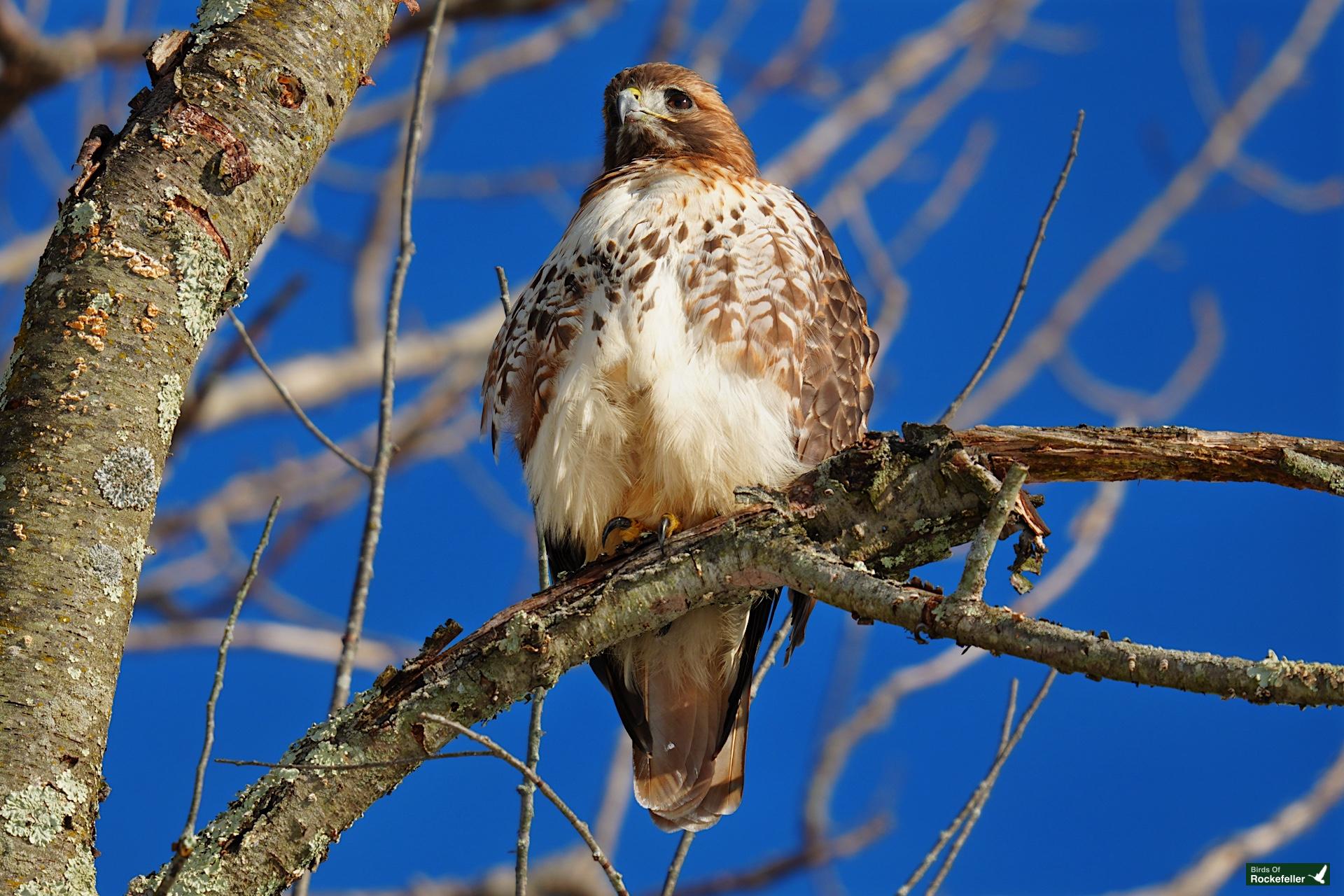
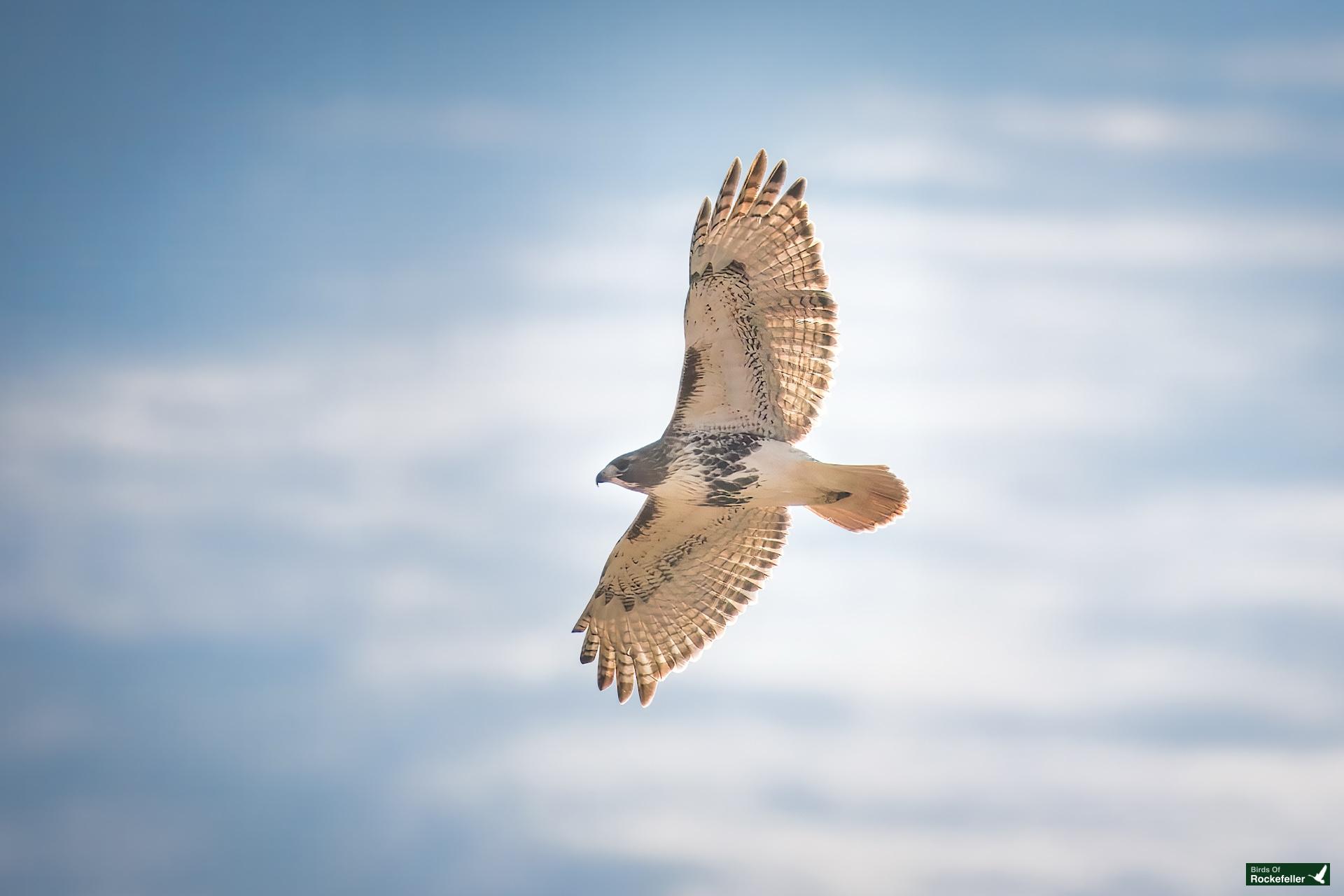
Adult Red-Tailed Hawks are large, stocky, with broad, rounded wings and a short, wide tail. The namesake rusty-red tail is visible on adults (juveniles have brown-banded tails). Most show a dark brown back, pale chest with a distinctive dark “belly band” of streaking, and dark leading edge on the underwing. There’s considerable plumage variation across their range. Some are very pale, others quite dark. In flight, look for the broad wings held in a slight V-shape when soaring. Their size is impressive, with their wingspan reaching 4-5 feet. Don’t confuse them with the similar but smaller Red-Shouldered Hawk, which has narrower wings and a banded tail.
What interesting behaviors might I observe?
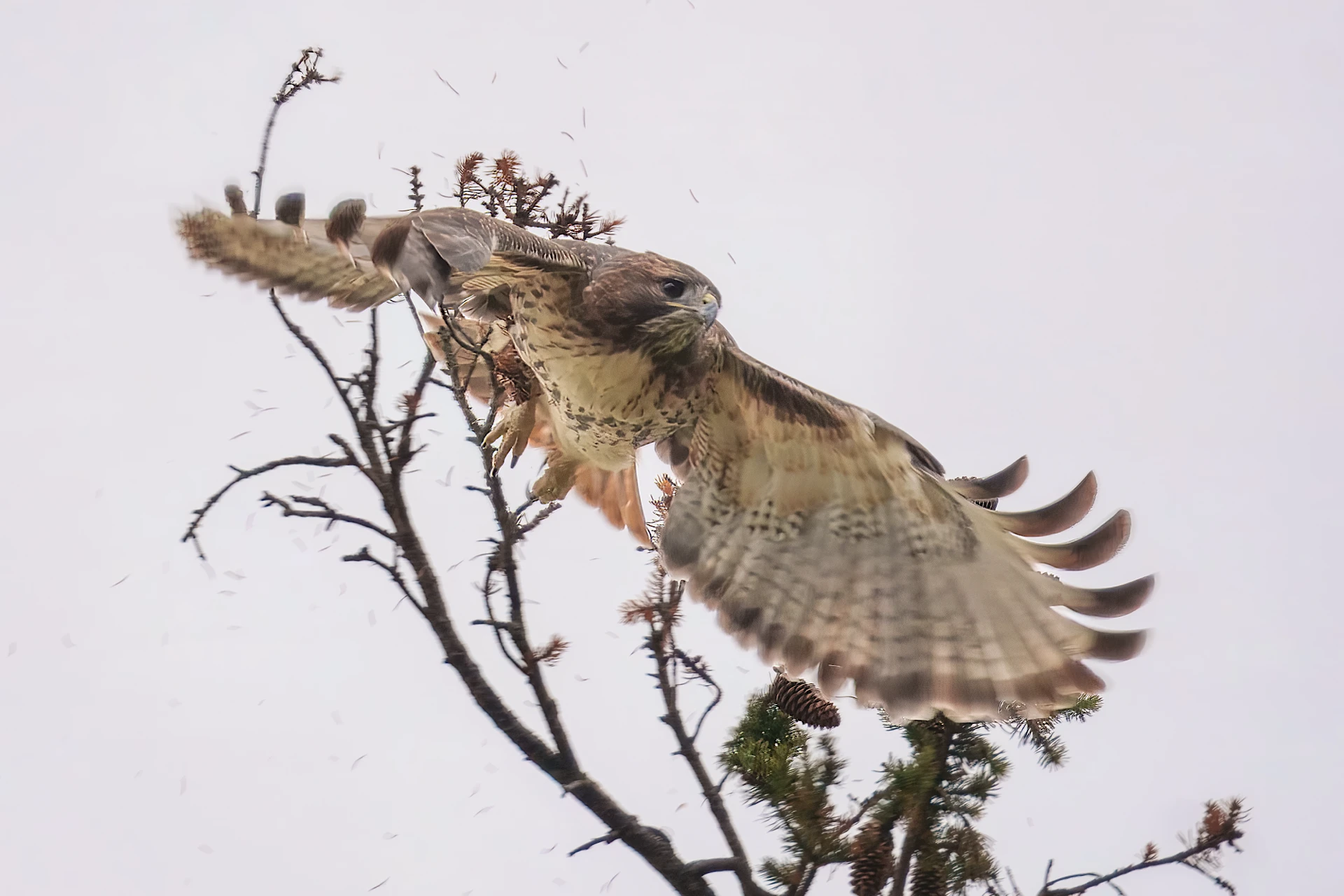
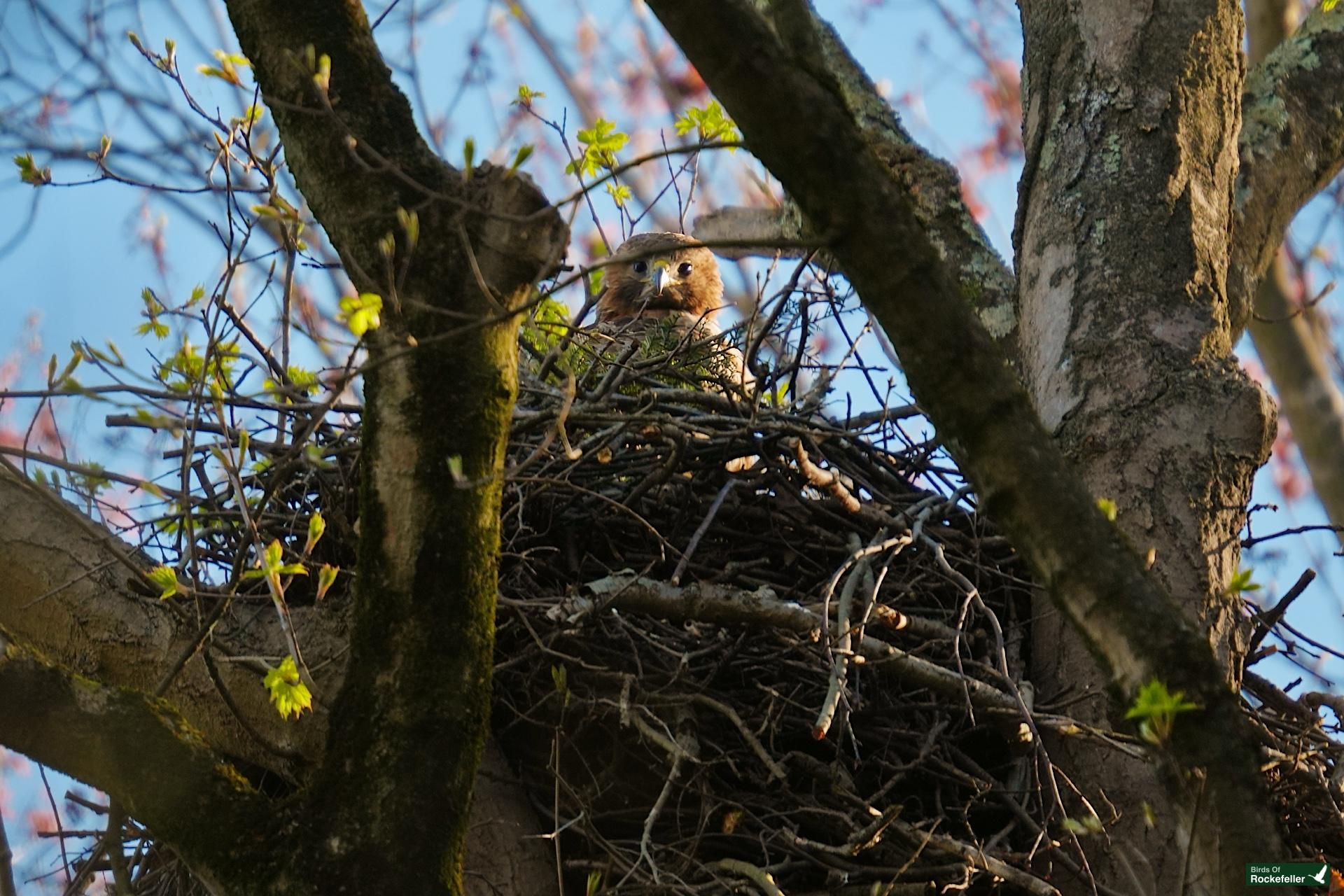
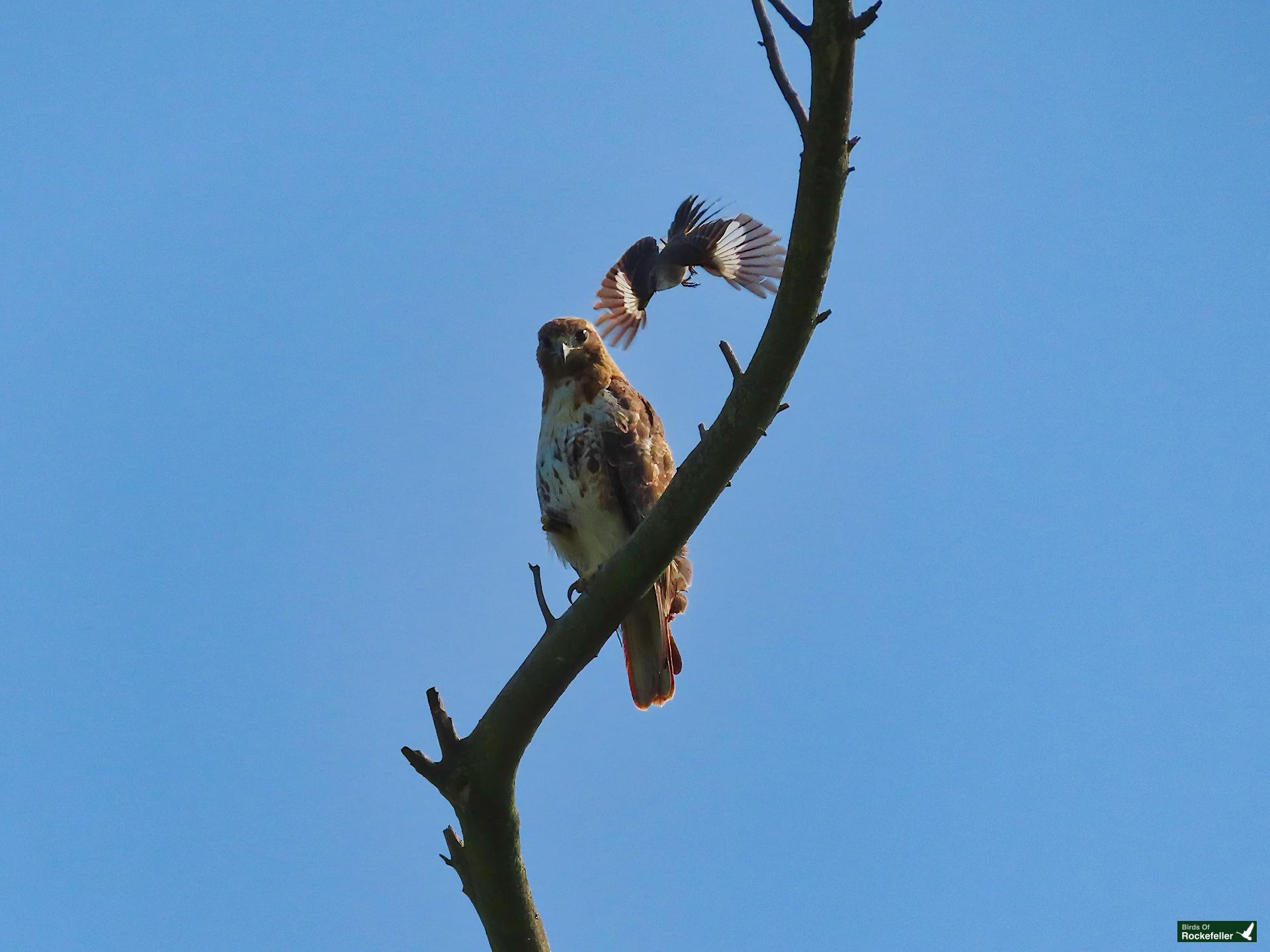
Watch for their spectacular courtship displays in late winter and early spring—pairs perform aerial acrobatics, diving and rolling together, sometimes locking talons in mid-air. It’s not unusual to see Red-Tailed hawks chased by other birds like red-winged blackbirds and northern mockingbirds—this behavior, called “mobbing,” occurs when smaller birds harass larger predators to drive them away from nesting areas. Red-tails are surprisingly tolerant of this harassment, often ignoring the attackers. If the bird starts to stand up on the perch and lean forward, it’s likely getting ready to take off, so be ready to capture flight shots. Several years ago, hawks built a large nest, still visible on the Gory Brook Trail near the Pocantico River Trail, allowing me to photograph it from a safe distance so I wouldn’t disturb the nesting hawks. These stick nests are massive platforms reused and added to year after year.
What personality traits define this species?
Bold, adaptable, and patient. Red-Tailed Hawks are surprisingly tolerant of human activity, which explains their success in suburban and even urban environments. They’re confident predators that can sit motionless on a branch for hours, waiting for the perfect hunting opportunity. While territorial during breeding season, they’re generally not aggressive toward humans. Their adaptability allows them to thrive where other raptors have declined. They’re also remarkably persistent—I’ve watched them make multiple unsuccessful hunting attempts before finally succeeding.
What are some tips when photographing this bird?
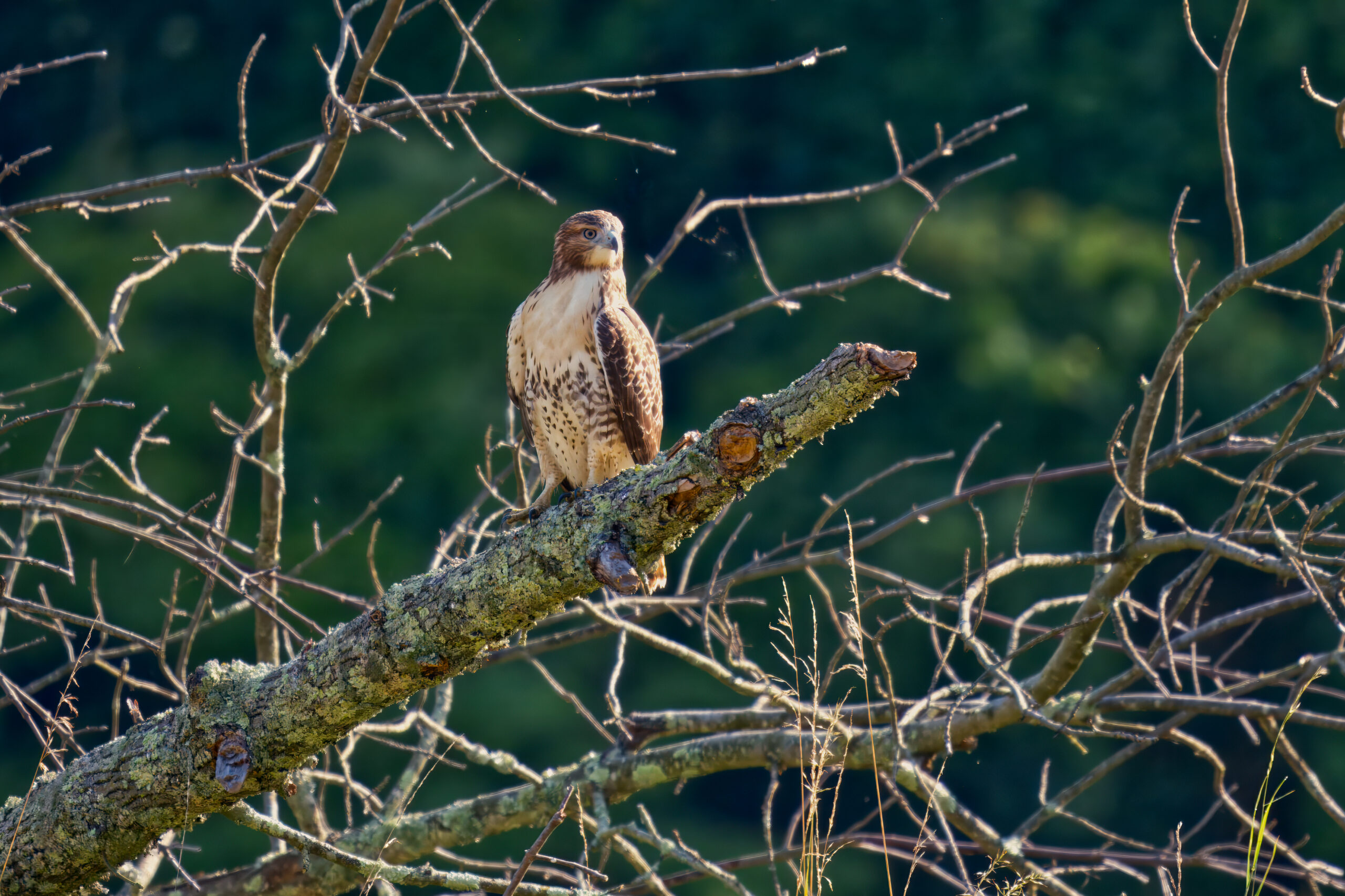
Red-Tailed Hawks offer excellent photography opportunities because they often stay in open, accessible locations and tolerate reasonable approach distances. This is a good opportunity to get some nice pictures, especially when they’re focused on hunting and less aware of your presence. Early morning and late afternoon provide the best light for capturing the red tail coloration. Approach the birds slowly. Watch their body language—if the bird starts to stand up and lean forward, it’s likely getting ready to take off, so be ready to take pictures of the hawk in-flight. For flight photography, cloudy-bright days work well, eliminating harsh shadows on the underwings. Position yourself below soaring birds to capture the classic spread-tail silhouette.
Photography tips for Rockefeller State Park Preserve:
Year-round, especially Spring and Fall: Focus on the Ash Tree Loop, Farm Meadow Trail, Barnyard Hill Trail, Canter’s Alley, and the Pocantico River Trail—these are the most productive areas for finding Red-Tailed Hawks.
Branch hunting: Look for hawks in taller trees overlooking open fields, particularly at the top of the Overlook Trail or along the Barnyard Hill Trail. When you spot a hawk, be patient—they can stay in one spot for extended periods.
Reading behavior: Watch for the hawk to stand up and lean forward —this signals an imminent takeoff. Have your camera ready for flight shots.
Historic nest site: The large nest on the Gory Brook Trail near the Pocantico River Trail is still visible and offers photography opportunities from a safe, respectful distance.
Lucy the leucitic hawk:Rockefeller State Park Preserve has a leucitic Red-Tailed Hawk resident they have named “Lucy”—the bird is mostly white with some tan coloring on its body. “Lucy” is rarely seen in the park. I’ve hiked hundreds of miles there and have only seen her once, but I wasn’t able to get close enough for a picture. If you’re fortunate enough to spot Lucy, it’s a truly special sighting.
Mobbing behavior:Don’t be surprised to see smaller birds like red-winged blackbirds and northern mockingbirds chasing and harassing the hawks—this provides dynamic action photography opportunities.
What does this bird sound like?
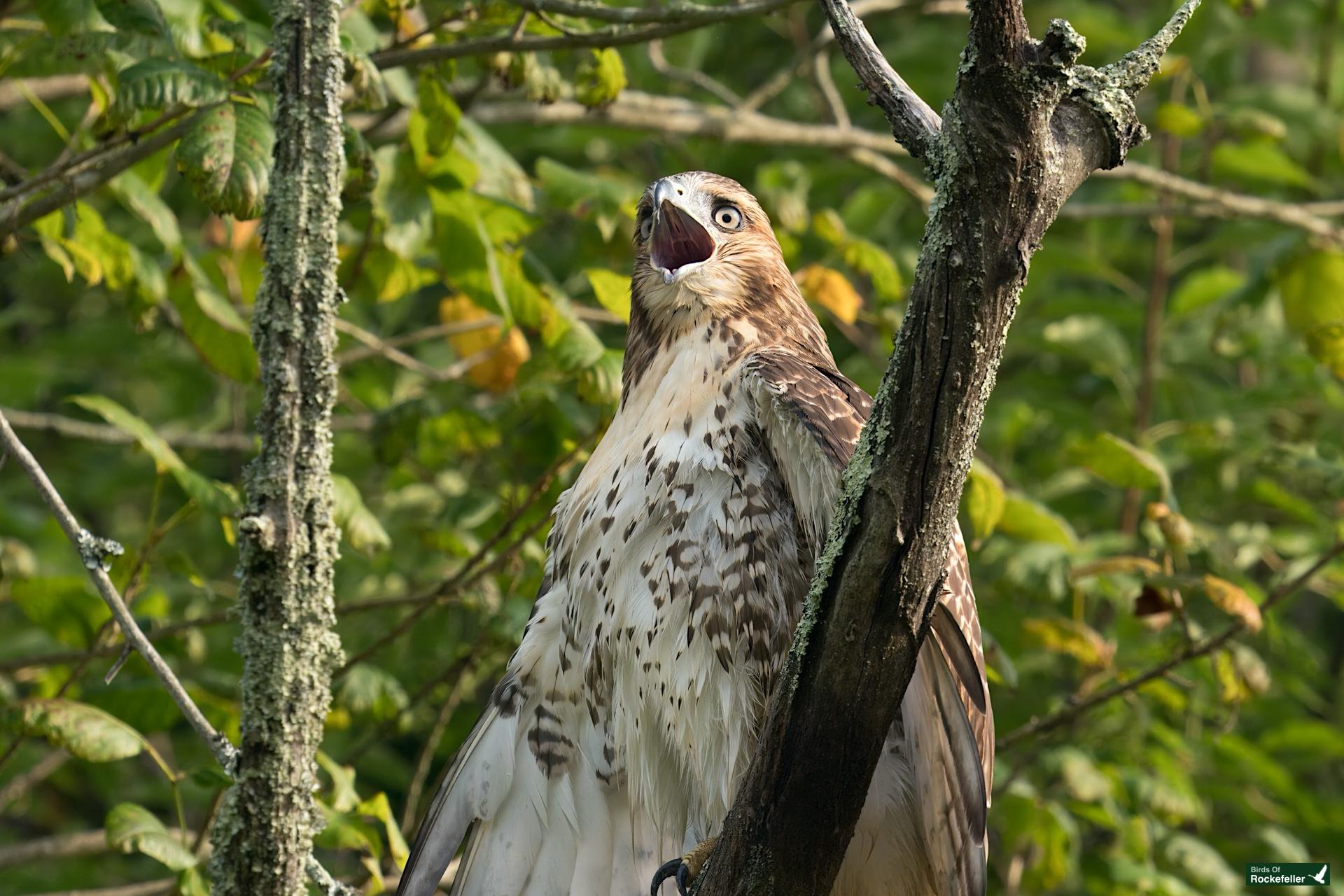
The Red-Tailed Hawk’s call is one of the most recognizable bird sounds—a harsh, descending scream often written as “keeee-arrr” or “kree-eee-ar.” This is the sound used in movies and TV whenever an eagle appears on screen (even though Bald Eagles actually sound quite different—squeaky and underwhelming). You’ll hear it most often during courtship season or when hawks are defending territory. The call carries for long distances and often alerts you to a hawk’s presence before you see it.
When does this bird nest, and what should I know about its breeding behavior?
Red-Tailed Hawks begin courtship in late winter, with nesting starting in March or April in most areas. They build large stick nests high in tall trees, cliff ledges, or occasionally on man-made structures. Pairs often reuse and enlarge the same nest over many years—the nest on Gory Brook Trail is a perfect example. The female lays 1-5 eggs (usually 2-3) and does most of the incubating while the male hunts and brings food. Eggs hatch after about 30 days, and young fledge at 42-46 days old but remain dependent on parents for several more weeks. Both parents vigorously defend the nest area, occasionally dive-bombing intruders—including humans who get too close.
What are the challenges Red-Tailed Hawks face in the habitat?
Vehicle collisions are a major threat, especially for birds hunting along roadsides. Rodenticide poisoning kills hawks that consume poisoned prey. Power line electrocution impacts some populations. West Nile Virus has affected some individuals. Illegal shooting, though less common than historically, still occurs. Human disturbance at nest sites can cause abandonment. Despite these threats, Red-Tailed Hawks are thriving—their adaptability and tolerance of human-modified landscapes has allowed them to succeed where other raptors have struggled. Populations are stable or increasing across most of their range.
How close can I get without disturbing it?
Red-Tailed Hawks are more tolerant than many raptors, but respect is still essential. Resting birds often allow an approach to within 100-150 feet if you move slowly and avoid direct eye contact or sudden movements. During nesting season, stay at least 300-500 feet from active nests—closer approaches can cause adults to abandon eggs or nestlings. If a hawk leaves its perch or becomes agitated (calling, raising crest feathers, adjusting position to face you), you’re too close. A 400-600mm telephoto lens allows for high-quality photos from a respectful distance.
What’s a common myth or misconception about this species?
Many people think Red-Tailed Hawks migrate south for winter, but most individuals are year-round residents, especially in temperate climates. Only the northernmost populations migrate. Another misconception is that they primarily hunt chickens or pets—while they’re capable of taking small chickens, this is rare, and they vastly prefer wild prey like rodents. Some people confuse all large raptors as “hawks” or “eagles”—learning the distinctive red tail and broad-winged silhouette helps with identification. Finally, the dramatic “eagle scream” in movies is almost always a Red-Tailed Hawk’s call dubbed over eagle footage because real eagle vocalizations aren’t impressive enough for Hollywood.
Fun fact:
Red-Tailed Hawks can see prey from over 100 feet in the air and have vision about 8 times sharper than humans—they can spot a mouse from the height of a 10-story building! Their grip strength is formidable, with talons exerting about 200 psi of pressure—enough to kill prey instantly. Despite their predatory prowess, Red-tails occasionally practice kleptoparasitism, stealing prey from other raptors rather than hunting. Leucistic Red-Tailed Hawks like “Lucy” at Rockefeller State Park Preserve are extremely rare—leucism causes reduced pigmentation, resulting in pale or white plumage while retaining normal eye color (unlike albinism). These birds face increased predation risk and hunting challenges due to their conspicuous coloring, making sightings especially remarkable.