
Table of Contents
- Frequently Asked Questions About the Red-Winged Blackbird
- TL;DR
- Where will I most likely find Red-Winged Blackbirds?
- What’s on the menu, and how does it find food?
- What should I look for when trying to find Red-Winged Blackbirds?
- What interesting behaviors might I observe?
- What personality traits define this species?
- What are some tips when photographing this bird?
- Photography tips for Rockefeller State Park Preserve:
- What does this bird sound like?
- When does this bird nest, and what should I know about its breeding behavior?
- What are the challenges Red-Winged Blackbirds face in the habitat?
- How close can I get without disturbing it?
- What’s a common myth or misconception about this species?
- Fun fact:
Frequently Asked Questions About the Red-Winged Blackbird
TL;DR
• The arrival of Red-Winged Blackbirds (agelaius phoeniceus) means the spring bird migration is on its way to Rockefeller State Park Preserve
• Found all over the park, but fields around Canter Alley, Pocantico River, and Stone Barns Trails have the most Red-Winged Blackbirds
• Their loud calls often seem to take over sections of the park when they flock together—you’ll hear them before you see them
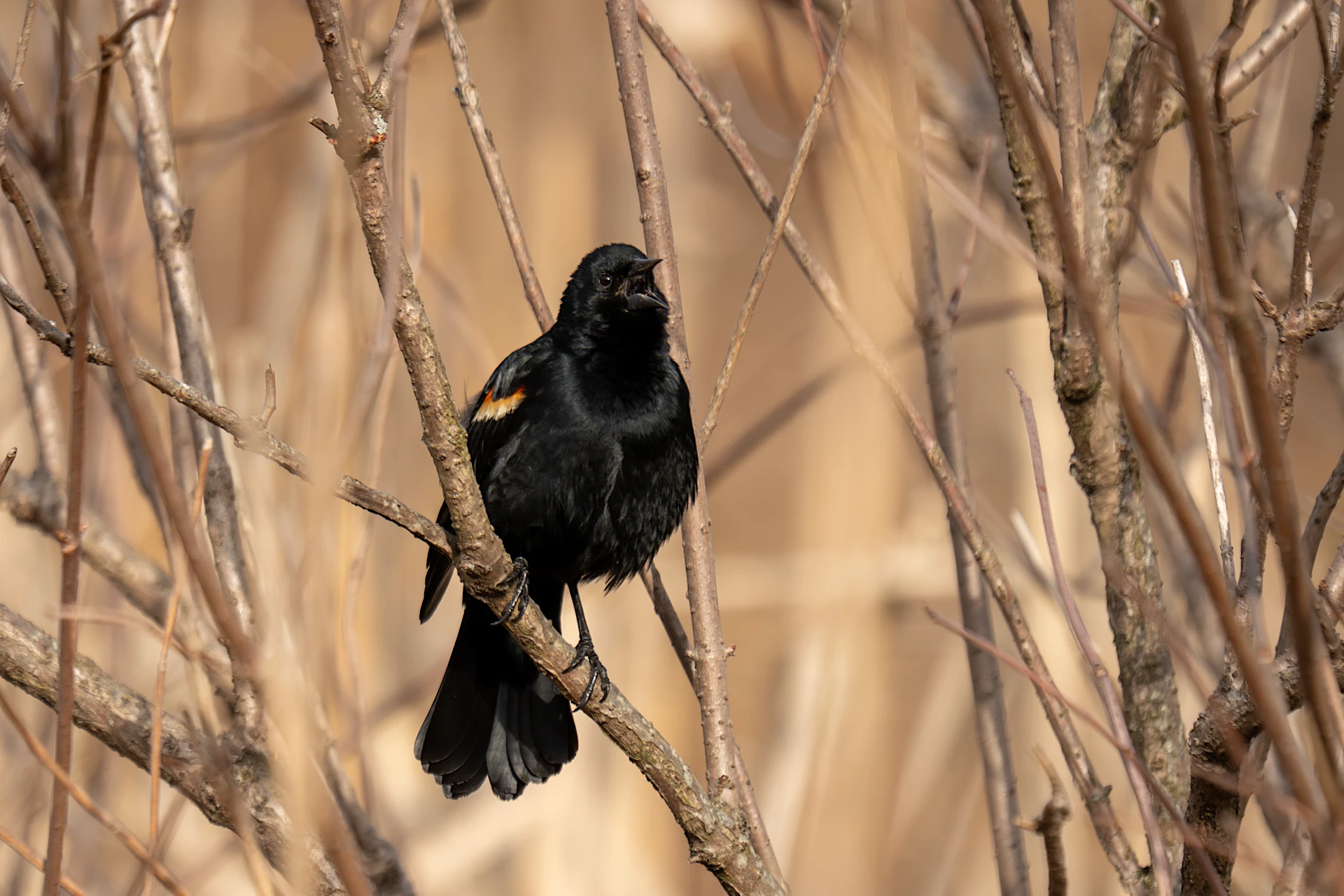
• Great photography subjects due to the striking contrast between black bodies and red-orange wing stripes
• Don’t mind “posing” for photographs—you can sometimes get close and capture interesting shots
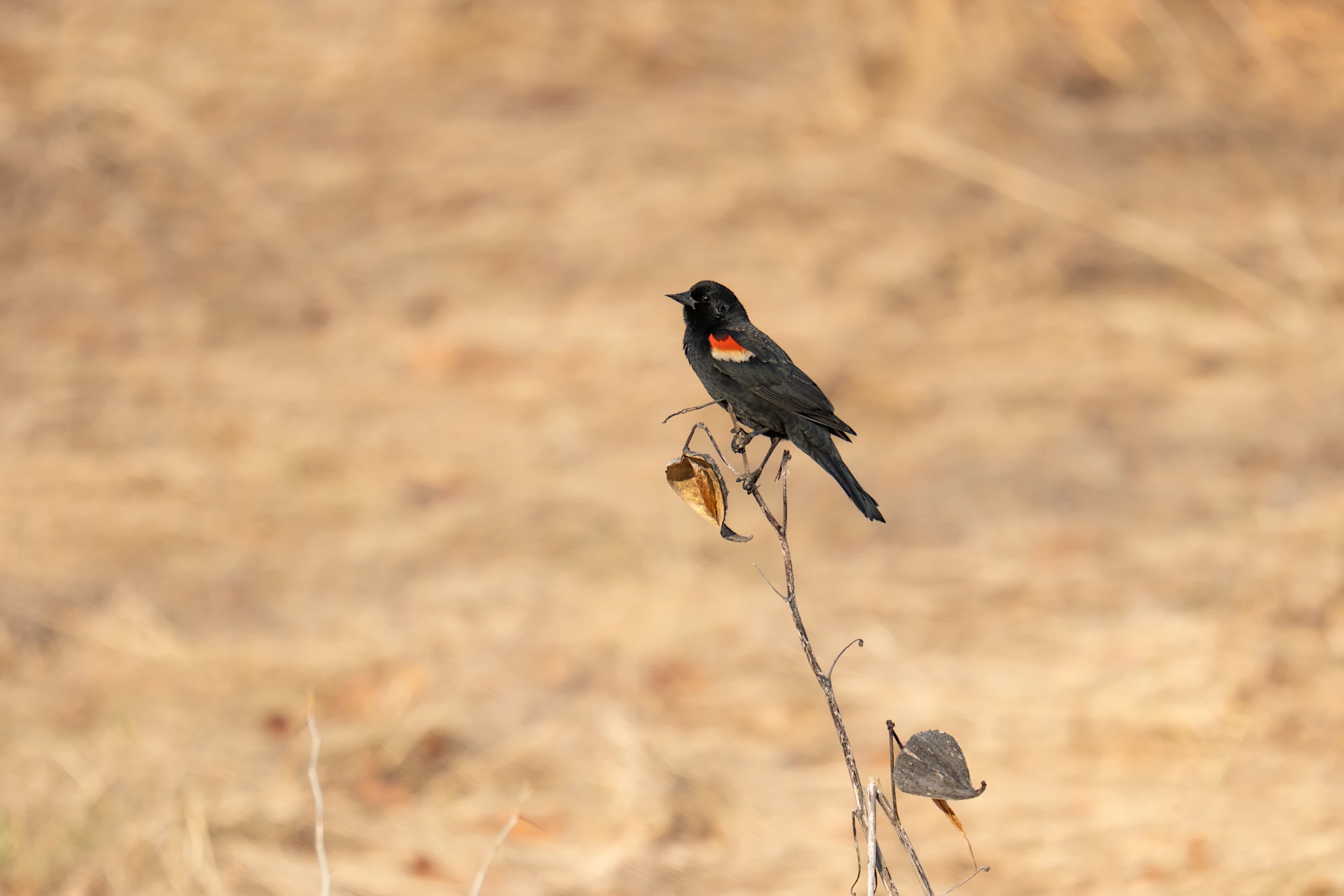
• Look for them perched on bushes or cattails in fields when you hear their distinctive calls
• The farm’s wheat fields provide spectacular opportunities—golden wheat stalks create a beautiful contrast with the birds
• Dramatic sexual dimorphism: males are black with bright wing stripes, females have brown plumage with yellow coloring
• Photography tip: Pay close attention to head position—the dark plumage makes it difficult to see eyes, so wait until the head is positioned for clear eye visibility
Where will I most likely find Red-Winged Blackbirds?
Red-Winged Blackbirds are among North America’s most abundant birds, found in marshes, wetlands, roadside ditches, wet meadows, and agricultural fields across most of the continent. They require some water nearby and tall vegetation—cattails, reeds, or shrubs—for nesting and perching. During migration and winter, they gather in massive flocks that can number in the thousands or even millions, often mixing with other blackbird species, grackles, and starlings in agricultural areas.
At Rockefeller State Park Preserve in Pleasantville, NY, the arrival of Red-Winged Blackbirds means the spring bird migration is on its way. These birds can be found all over the park, but I’ve noticed that the fields around the Canter Alley, Pocantico River, and the Stone Barns Trails seem to have the most Red-Winged Blackbirds. As you walk through the park, you’ll know when you find Red-Winged Blackbirds from their loud calls, so look in the fields to find them perched on bushes or cattails.
What’s on the menu, and how does it find food?
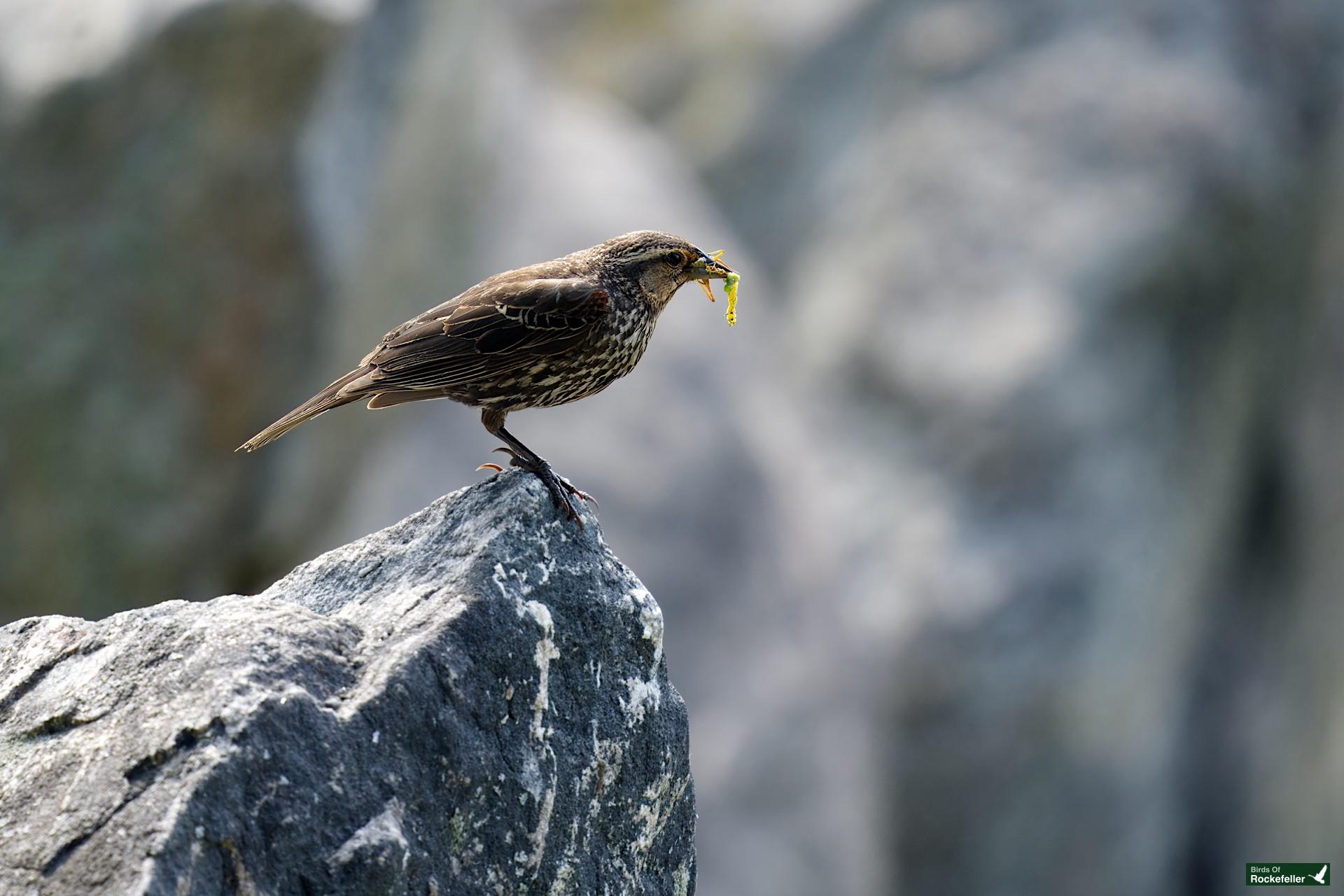
Red-Winged Blackbirds are omnivorous opportunists with a diet that shifts seasonally. During breeding season, they feed heavily on insects—beetles, caterpillars, grasshoppers, and spiders—which they catch on the ground or glean from vegetation. They also take dragonflies and other flying insects in mid-air. In fall and winter, they switch to seeds and grains, foraging in agricultural fields for waste corn, wheat, oats, and rice. They’ll also eat berries and visit feeders for sunflower seeds. Watch them use their strong bills to pry open plant stems and seed heads, or see them foraging on the ground with a distinctive forward-hopping gait.
What should I look for when trying to find Red-Winged Blackbirds?
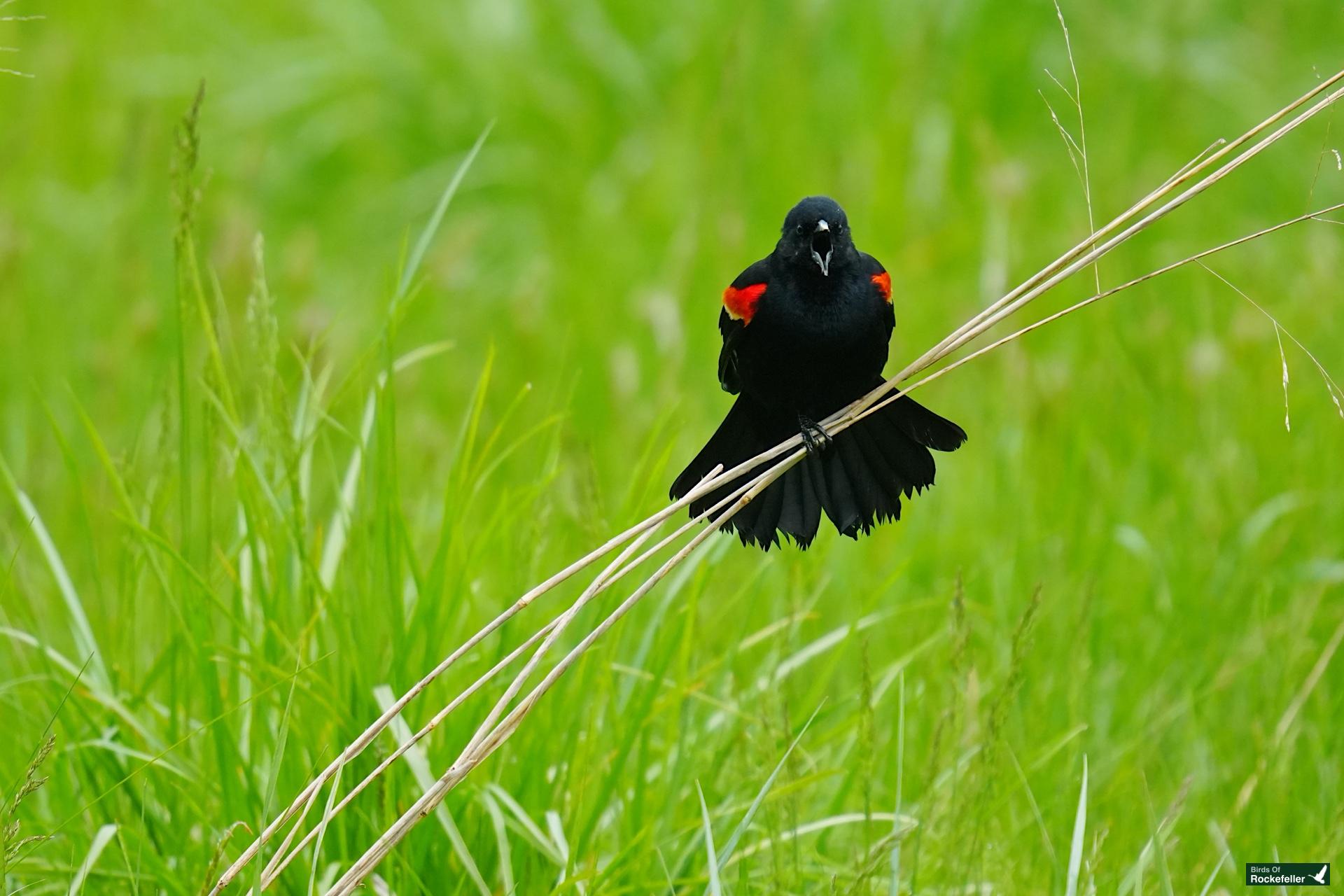
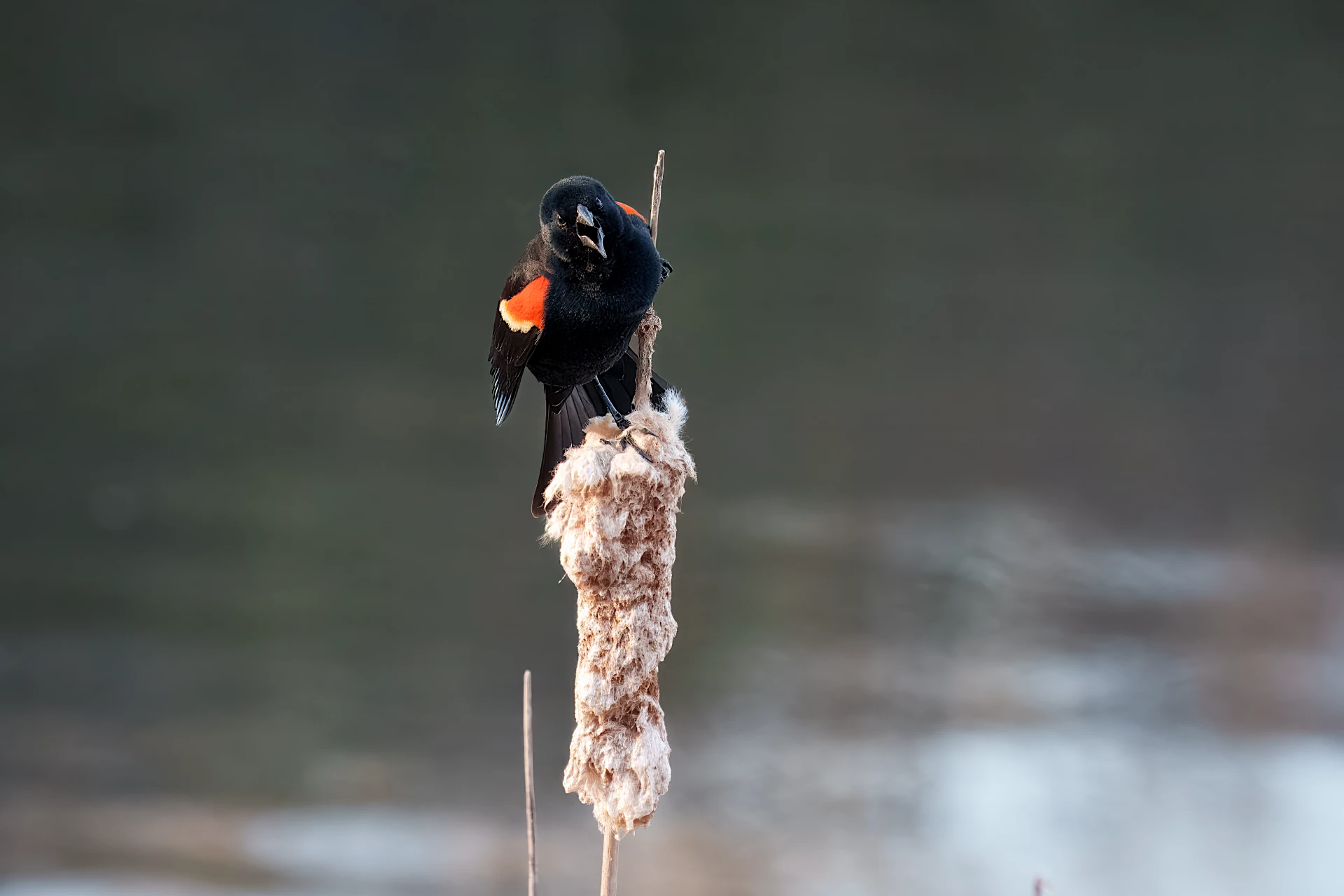
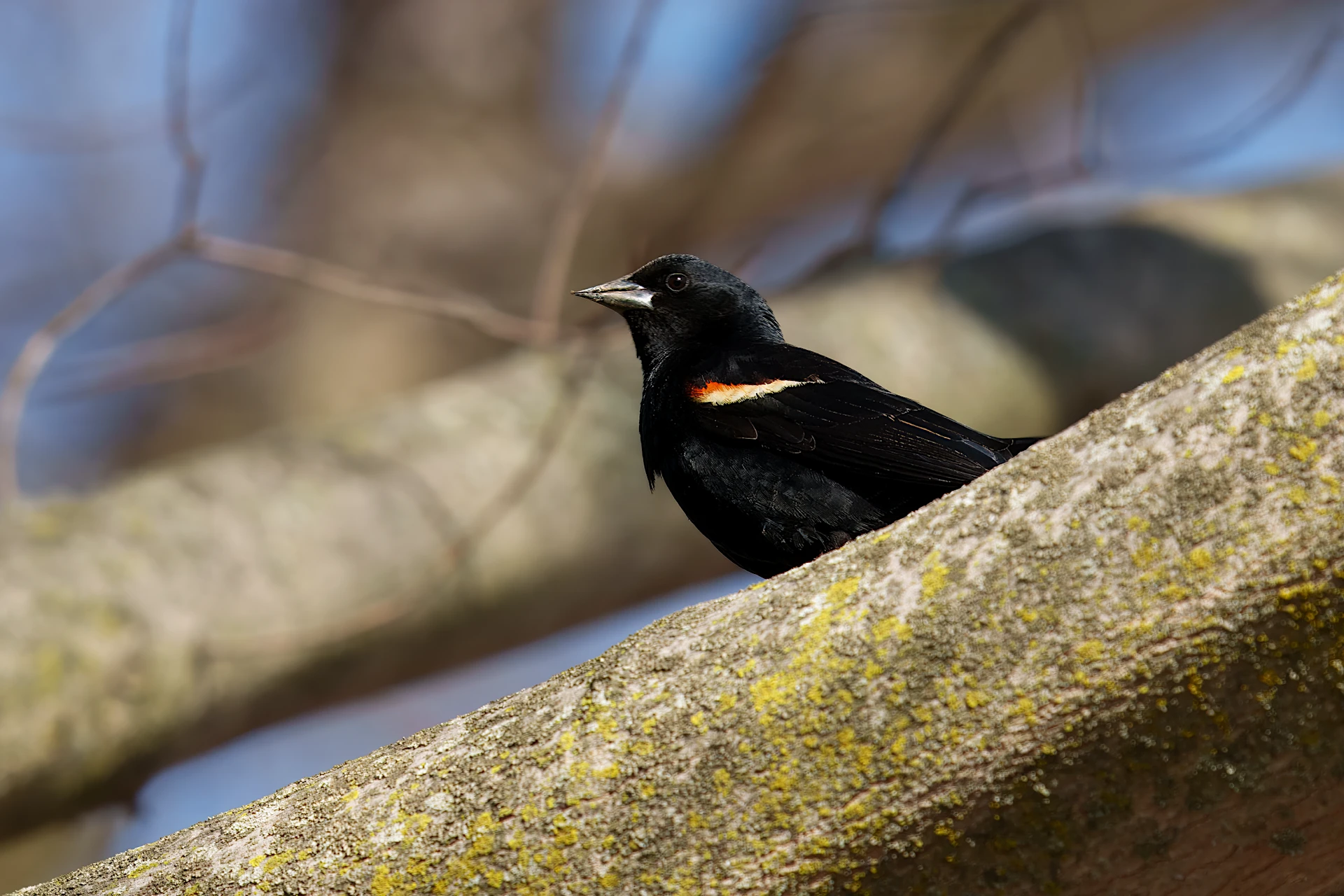
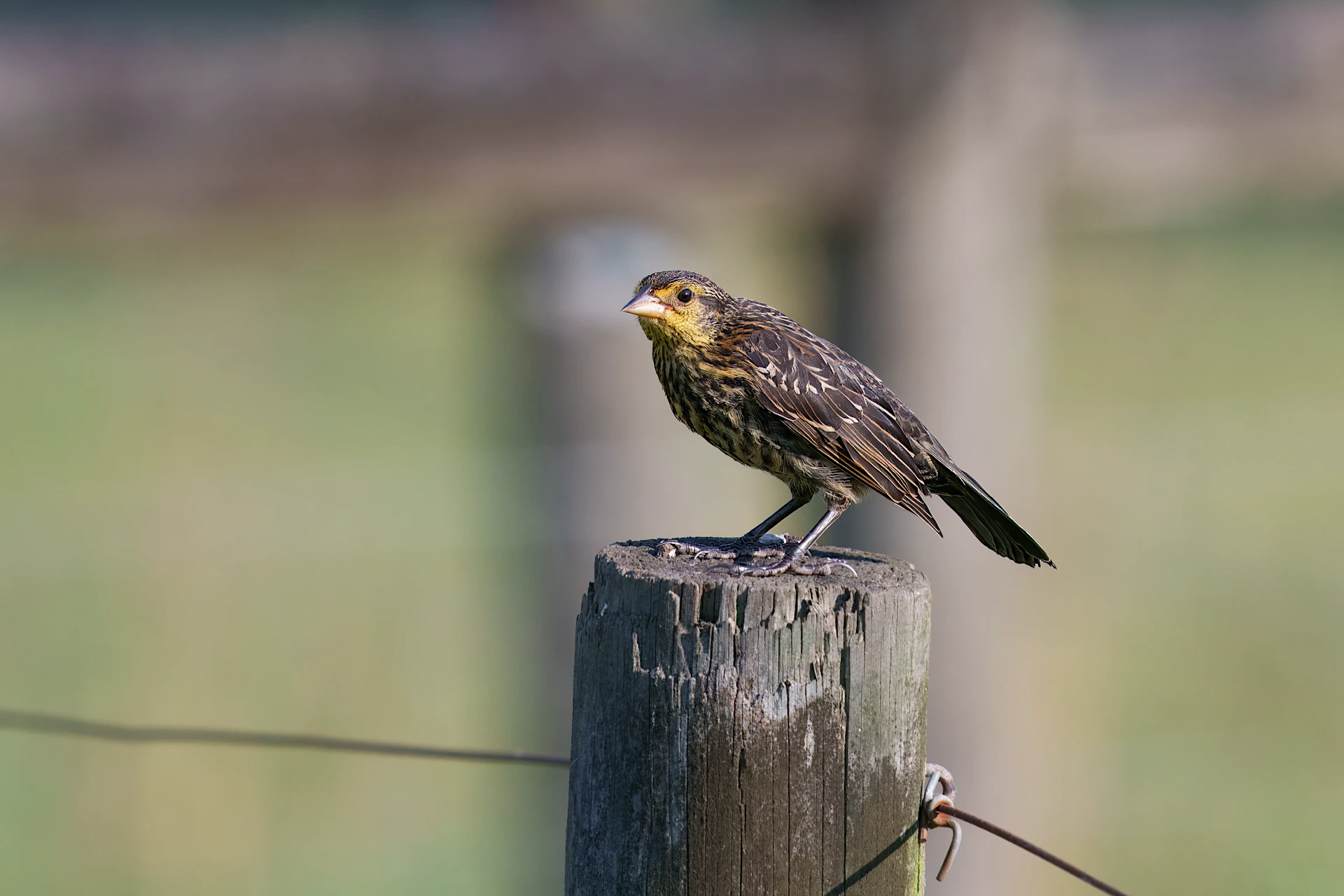
One of the interesting things about Red-Winged Blackbirds is the difference between the plumage of the male and female birds. Males are unmistakable—glossy black with brilliant red shoulder patches (epaulets) bordered by yellow or buff. The male is black with bright stripes on their wings. Females look completely different and are often overlooked—heavily streaked brown and tan plumage with some yellow coloring, resembling large sparrows. Juveniles resemble females but are even more heavily streaked. Males flash their red epaulets during territorial displays but can hide them when threatened, appearing all-black. In flight, look for the male’s distinctive wing patches and listen for their calls. Don’t confuse females with sparrows—Red-Winged Blackbirds are larger with longer, pointed bills and different behavior.
What interesting behaviors might I observe?
Males are highly territorial during breeding season, performing elaborate displays—puffing out their red epaulets, spreading their tail feathers, and singing loudly from prominent perches. Watch for aggressive aerial chases as males defend territories from rivals. They’ll also mob larger birds like hawks that venture too close to nesting areas. Red-Winged Blackbirds make a lot of noise with their loud calls, and the noise sometimes seems to take over sections of the park when they flock together. During migration and winter, their social behavior is dramatic—massive flocks swirling and settling in fields, creating cacophonies of calls. Males are polygynous, often mating with multiple females whose nests overlap in his territory.
What personality traits define this species?
Bold, territorial, and vocal. Male Red-Winged Blackbirds are confident defenders of their breeding territories, fearlessly attacking much larger birds and even dive-bombing humans who get too close to nests. They’re gregarious outside breeding season, gathering in enormous communal roosts. Red-Winged Blackbirds also don’t mind “posing” for photographs, so you can sometimes get close to the bird and get some interesting shots. They’re adaptable and opportunistic, thriving in human-modified landscapes. Their persistent, loud vocalizations and conspicuous displays make them impossible to ignore—they demand attention and typically get it.

What are some tips when photographing this bird?
I like photographing Red-Winged Blackbirds because of the contrast between their black bodies and the red and orange stripes on their wings. When photographing Red-Winged Blackbirds, pay close attention to the position of their heads. Because the bird is so dark, it can be difficult to get a good shot that shows their eyes. Wait until their heads are positioned so their eyes are clearly visible, which is important for bird photography. Catch-light in the eye brings the image to life—position yourself so light hits the bird’s face. The farm at Rockefeller State Park Preserve often grows wheat in some fields, and I’ve taken some great pictures of Red-Winged Blackbirds perched on stalks of wheat. The golden color of the wheat provides a great contrast to the birds.
For display behavior, photograph males with epaulets fully flared—this requires patience as they control when to show the red. Early morning light enhances the glossy black plumage and makes the red epaulets glow. Don’t overlook females—their intricate streaking and subtle beauty make for compelling images, especially when paired with males for comparison. In flight, the red wing patches flash brilliantly against the sky.
Photography tips for Rockefeller State Park Preserve:
- Prime locations: Focus on fields around Canter Alley, Pocantico River, and Stone Barns Trails where Red-Winged Blackbirds are most abundant.
- Listen first: Their loud calls will alert you to their presence—when you hear them, scan the fields for birds perched on bushes or cattails.
- Wheat field opportunities: When the farm grows wheat, photograph Red-Winged Blackbirds perched on golden stalks—the color contrast is spectacular.
- Approachability: These birds don’t mind “posing”—take advantage of their tolerance to get closer for detailed shots.
- Head position is critical: The dark plumage makes eye visibility challenging—wait for the head to turn so the eye catches light and is clearly visible.
- Spring arrival: Their return signals the start of spring migration—photograph them as harbingers of seasonal change.
- Display photography: Watch for males puffing out red epaulets during territorial displays—be ready to capture this dramatic behavior.
- Flock dynamics: When they gather in large groups, their noise can dominate sections of the park—photograph the social interactions and group behavior.
What does this bird sound like?
The male’s song is instantly recognizable—a liquid, gurgling “oak-a-lee” or “conk-la-ree” that sounds like rusty hinges. They also give sharp “check” calls and various chattering sounds. Females produce softer “chit” calls. During breeding season, males sing persistently from cattails, fence posts, or shrubs, often with wings partially spread and red epaulets displayed. The communal roosts in fall and winter create an incredible wall of sound—thousands of birds calling simultaneously in chattering, whistling chaos. Once you learn their distinctive call, you’ll recognize them instantly, often hearing them long before seeing them.
When does this bird nest, and what should I know about its breeding behavior?
Red-Winged Blackbirds begin nesting in early spring, March through July, depending on latitude. Females build well-concealed cup nests woven among cattails, reeds, or shrubs, typically over water or in dense vegetation 3-8 feet above ground. She uses grass, sedges, and other plant materials to line the nest with fine grasses. Females lay 3-4 pale blue-green eggs with dark scrawls and spots, incubating them for 11-13 days while males defend territory and mate with additional females. Both parents feed nestlings (though females do most of the work), which fledge at 11-14 days. Most pairs raise 1-2 broods per season. Males may have 2-15 females nesting in their territory simultaneously.
What are the challenges Red-Winged Blackbirds face in the habitat?
Wetland loss and drainage reduce nesting habitat, though they’ve adapted to roadside ditches and agricultural areas. Pesticides reduce insect prey during the breeding season. They’re considered agricultural pests in some areas due to damage to grain crops, leading to control programs. Collisions with vehicles kill many birds. Brown-headed Cowbirds parasitize some nests. During winter, massive roosts sometimes conflict with human activities, and birds are occasionally killed at roost sites. Despite these challenges, Red-Winged Blackbirds remain abundant—they’re one of North America’s most numerous birds, with populations estimated at 130+ million.
How close can I get without disturbing it?
Red-Winged Blackbirds are relatively tolerant outside breeding season, often allowing approach to within 20-30 feet, especially when focused on feeding. During breeding season, males become aggressive—they may dive-bomb you if you approach within 50 feet of nests, giving loud alarm calls. If you see this behavior, back away immediately. Females are more secretive and will slip away from nests when disturbed. For photography, a 300-400mm lens provides frame-filling shots from comfortable distances. Never search for or approach nests directly—observe territorial males from a distance and let the birds’ behavior guide you.
What’s a common myth or misconception about this species?
Many people don’t realize male and female Red-Winged Blackbirds look completely different, often thinking the brown, streaky females are a different species entirely—perhaps a large sparrow or female House Finch. Another misconception is that they’re always aggressive—while males defend nests vigorously, they’re quite peaceful outside breeding season. Some people think all blackbirds are the same, but Red-Winged Blackbirds are distinct from Common Grackles, European Starlings, and Rusty Blackbirds. There’s also a myth that they’re declining—while some local populations have decreased, they remain one of North America’s most abundant birds overall.
Fun fact:
Male Red-Winged Blackbirds can control their shoulder patches independently, displaying them fully, partially, or hiding them completely depending on the social situation. When threatened by predators, they tuck the red away, appearing all-black and less conspicuous. During territorial disputes, they flare them maximally to appear larger and more intimidating. The red color comes from carotenoid pigments obtained through diet—the brighter the red, the healthier and more dominant the male. Some males have orange, yellow, or even white shoulder patches instead of red. Red-Winged Blackbirds can live up to 15 years in the wild, though most survive only 2-3 years. They’re among the most studied birds in North America, with over 1,000 scientific papers published about their behavior, ecology, and evolution!